

Location: Romblon Island
Depth: medium depth
Cover Photo: Angela Peetz
Scientific Name: Dendrochirus biocellatus (Fowler, 1938)
Type: Romblon Fish
Group: Scorpaenoidei
Family: Scorpaenidae

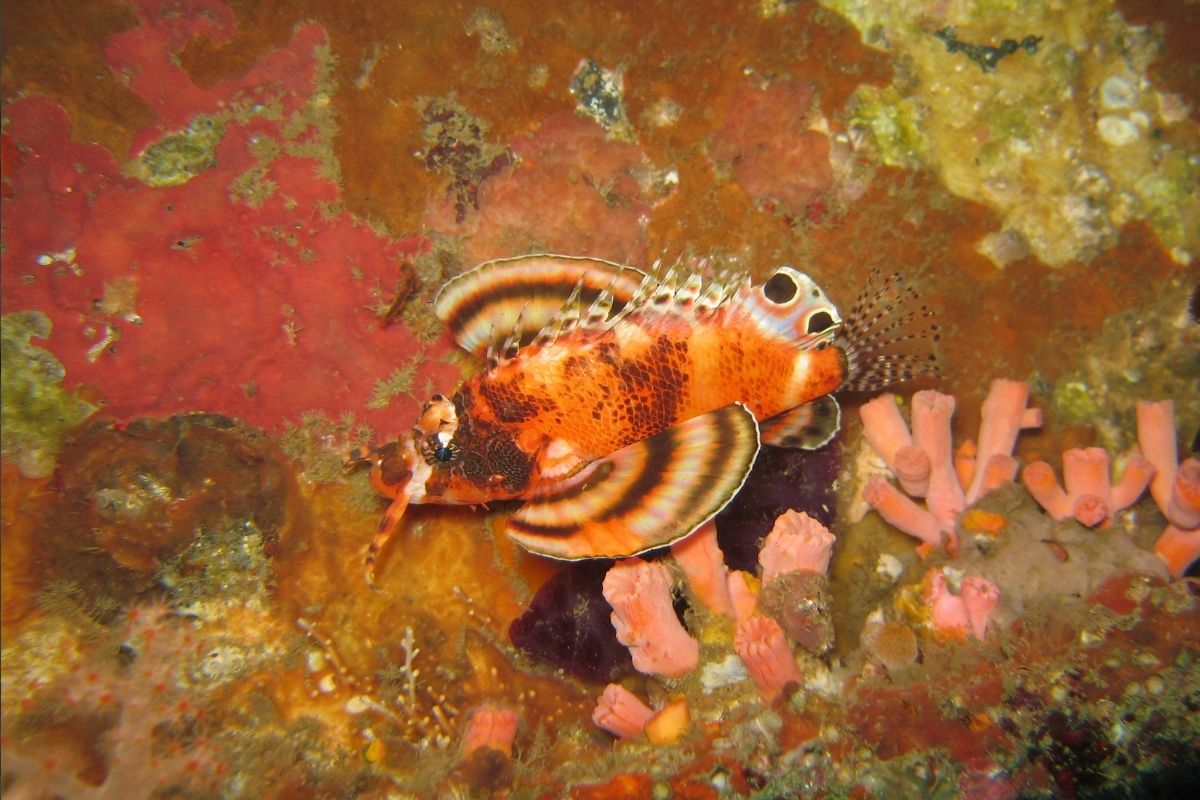
Dendrochirus biocellatus: The Mesmerizing Twinspot Lionfish
Dendrochirus biocellatus, commonly known as the Twinspot Lionfish, represents one of the most ornate and behaviorally fascinating members of the Scorpaenidae family found in Philippine waters. This captivating species has become a highly prized subject for underwater photography enthusiasts and scuba diving professionals exploring the rich marine biodiversity of Romblon and surrounding tropical reef systems.
A Species of Distinctive Beauty
The scientific name Dendrochirus biocellatus refers to the species’ characteristic twin eyespots, though this remarkable lionfish is equally famous for its elaborate chin barbels that resemble an ornate mustache. This stunning scorpionfish exemplifies the incredible diversity of Philippine marine ecosystems, representing the kind of intricate beauty that makes scuba diving in these waters an unforgettable experience for marine life enthusiasts.
Distinctive Features and Identification
Dendrochirus biocellatus displays dramatically elongated pectoral fin rays that create a spectacular fan-like display when fully extended. The species exhibits distinctive facial barbels that extend from the lower jaw, creating one of the most recognizable profiles among Indo-Pacific lionfish species.
The Twinspot Lionfish demonstrates classic ambush predation strategies, utilizing its ornate fin displays for both prey stunning and territorial communication. Dendrochirus biocellatus possesses highly effective venomous spines that deliver potent neurotoxins, making respectful observation distances essential during underwater encounters.
Habitat and Distribution in Romblon Waters
Dendrochirus biocellatus thrives in the diverse coral reef environments throughout Romblon’s marine areas, typically occupying crevices and overhangs where they can utilize their ambush hunting advantages. The species demonstrates preference for areas with complex reef topography that provides both shelter and optimal hunting positions.
Macro photography specialists engaged in scuba diving expeditions will discover that Dendrochirus biocellatus offers exceptional photographic opportunities due to their relatively predictable behavior and striking appearance. Their tendency to remain in favored locations combined with their ornate features makes them ideal subjects for underwater photography, while Romblon’s excellent water clarity ensures optimal documentation conditions.
Fascinating Behavioral Trivia and Adaptations
One of the most remarkable aspects of Dendrochirus biocellatus is their ability to change coloration dramatically based on mood, activity level, and environmental conditions. During hunting modes, they can shift from pale, almost translucent appearances to deep, rich patterns within minutes, demonstrating sophisticated chromatophore control.
The species exhibits unique feeding behaviors, often positioning themselves upside-down beneath coral overhangs to ambush prey from unexpected angles. Dendrochirus biocellatus demonstrates remarkable patience during hunting, remaining motionless for extended periods while using their barbels as sensory organs to detect water movement from approaching prey.
Significance for Marine Research and Conservation
The presence of Dendrochirus biocellatus in Romblon waters indicates healthy coral reef ecosystems with abundant small fish populations that serve as their primary prey base. Their role as specialized predators contributes to maintaining balanced fish community structures within complex reef environments.
Underwater photography documentation and scuba diving observations of Dendrochirus biocellatus provide valuable insights into lionfish ecology and territorial behavior patterns. These encounters highlight the importance of marine protected areas like those around Romblon for preserving the diverse microhabitats essential for specialized predator species.
Perfect Conditions for Underwater Photography
The coral reef systems surrounding Romblon provide outstanding opportunities for documenting Dendrochirus biocellatus in their natural reef environments. The region’s exceptional water transparency, healthy coral formations, and abundant overhang structures create ideal conditions for macro photography and behavioral observation.
Whether pursuing advanced underwater photography techniques or beginning your scuba diving journey with an interest in reef predators, Romblon’s waters offer remarkable access to Dendrochirus biocellatus and the diverse lionfish community that flourishes in these pristine Philippine coral reef ecosystems.
Related posts:
 Bulbonaricus brauni | Braun’s Pughead Pipefish
 Bulbonaricus brucei | Bruce’s Pughead Pipefish
 Halicampus nitidus | Glittering Pipefish
 Siokunichthys herrei | Spotted Xenia-Pipefish
 Pteroidichthys amboinensis | Ambon Scorpionfish
 Parapterois heterura | Gurnard Lionfish
 Hippocampus denise | Denise’s Pygmy Seahorse
 Hippocampus pontohi | Pontohi Pygmy Seahorse
 Dark Hippocampus pontohi | Severnsi Pygmy Seahorse
 Hippocampus bargibanti | Bargibanti Pygmy Seahorse
 Hippocampus denise | Spotted Denise’s Pygmy Seahorse
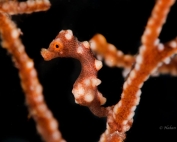 Hippocampus denise | ‘Santa Claus’ Denise Pygmy Seahorse