

Location: Romblon Island
Depth: medium depth
Cover Photo: Wolfgang Holz
Scientific Name: Calloplesiops altivelis (Steindachner, 1903)
Type: Romblon Fish
Group: Teleostei
Family: Plesiopidae
Calloplesiops altivelis: The Spectacular Comet Grouper
Calloplesiops altivelis, commonly known as the Comet Grouper or Marine Betta, represents one of the most visually stunning and behaviorally fascinating rare marine animals found in Philippine waters. This extraordinary species has become a legendary subject for underwater macro photography enthusiasts and scuba diving professionals exploring the diverse coral reef ecosystems surrounding Romblon Island, where encounters with this elusive predator rank among the most memorable experiences in Indo-Pacific diving.
A Species of Remarkable Beauty
The scientific name Calloplesiops altivelis reflects the species’ distinctive high dorsal fin and beautiful coloration, though this remarkable fish is equally famous for its extraordinary mimicry abilities. This captivating predator exemplifies the incredible diversity of rare critters found around Romblon Island, representing the kind of spectacular encounters that establish the Philippines as a premier destination for serious marine life enthusiasts and underwater photography specialists.
Distinctive Features and Identification
Calloplesiops altivelis displays a dramatic combination of deep purple to black coloration adorned with brilliant blue to white spots that create an almost celestial appearance. The species exhibits an exceptionally large dorsal fin that extends nearly the full length of its body, creating a distinctive silhouette that makes identification unmistakable even for novice scuba diving enthusiasts.
The Comet Grouper demonstrates one of nature’s most sophisticated mimicry strategies, imitating the appearance and behavior of moray eels when threatened. Calloplesiops altivelis utilizes specialized behavioral adaptations, including backing into crevices while displaying its tail end, which features a distinctive eyespot that resembles a moray eel’s head.
Habitat and Distribution in Romblon Island Waters
Calloplesiops altivelis inhabits complex coral reef environments throughout Romblon Island’s marine areas, typically occupying caves, overhangs, and crevices where they can utilize their ambush hunting strategies. The species demonstrates preference for areas with intricate reef topography that provides both shelter and optimal hunting positions for capturing small fish and crustaceans.
Underwater macro photographers engaged in scuba diving expeditions will discover that Calloplesiops altivelis presents exceptional photographic opportunities due to their striking appearance and relatively predictable behavior patterns. Their tendency to remain in favored territories combined with their spectacular coloration makes them ideal subjects for documenting rare marine animals, while Romblon Island’s pristine water conditions ensure optimal macro photography results.
Fascinating Behavioral Trivia and Adaptations
One of the most remarkable aspects of Calloplesiops altivelis is their ability to completely reverse their swimming orientation when threatened, presenting their tail end forward while the distinctive eyespot creates a convincing moray eel illusion. This extraordinary defensive behavior represents one of the most sophisticated mimicry strategies observed among coral reef fish species.
The species exhibits unique parental care behaviors, with males guarding and aerating egg masses in cave environments until hatching occurs. Calloplesiops altivelis demonstrates territorial behavior around preferred cave sites, engaging in elaborate fin displays and posturing that creates spectacular opportunities for underwater macro photography documentation.
Significance for Marine Research and Conservation
The presence of Calloplesiops altivelis around Romblon Island indicates healthy coral reef ecosystems with abundant small fish populations and complex habitat structures necessary for their survival. Their role as specialized predators contributes to maintaining balanced fish community dynamics within pristine reef environments.
Scuba diving observations and underwater macro photography documentation of Calloplesiops altivelis provide valuable insights into rare marine animals behavior patterns and habitat requirements. These encounters emphasize the importance of protecting Romblon Island’s marine sanctuaries, which serve as critical refuges for rare critters that require undisturbed cave and crevice environments.
Perfect Conditions for Underwater Macro Photography
The coral reef systems surrounding Romblon Island provide outstanding opportunities for documenting Calloplesiops altivelis in their natural cave and crevice habitats. The region’s good water transparency, healthy coral formations, and abundant overhang structures create ideal conditions for capturing detailed images of these rare marine animals and their fascinating behaviors.
Professional underwater macro photography practitioners, macro fans and dedicated scuba diving enthusiasts will find Romblon Island’s reputation for rare critters encounters perfectly exemplified by Calloplesiops altivelis (Comet Grouper), representing one of the most photogenic and behaviorally complex species among the diverse community of rare marine animals that flourish in these pristine Philippine coral reef ecosystems.
Related posts:
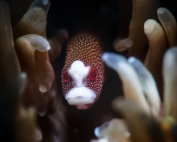 Bulbonaricus brauni | Braun’s Pughead Pipefish
 Bulbonaricus brucei | Bruce’s Pughead Pipefish
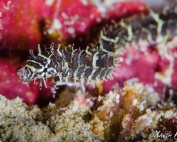 Halicampus nitidus | Glittering Pipefish
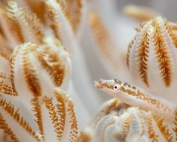 Siokunichthys herrei | Spotted Xenia-Pipefish
 Siokunichthys bentuviai | Barred Xenia-Pipefish
 Siokunichthys nigrolineatus | Mushroom-Coral Pipefish
 Hippocampus denise | Denise’s Pygmy Seahorse
 Hippocampus pontohi | Pontohi Pygmy Seahorse
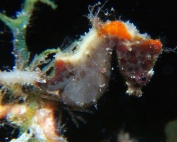 Dark Hippocampus pontohi | Severnsi Pygmy Seahorse
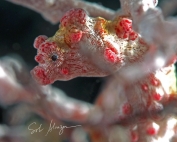 Hippocampus bargibanti | Bargibanti Pygmy Seahorse
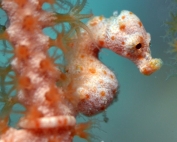 Hippocampus denise | Spotted Denise’s Pygmy Seahorse
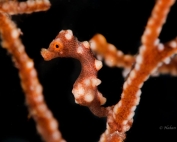 Hippocampus denise | ‘Santa Claus’ Denise Pygmy Seahorse